

Paradise Island (2010)
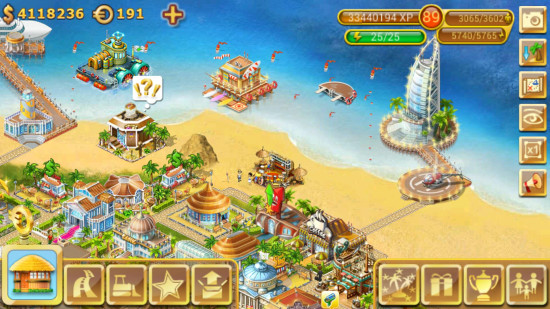
Genres: StrategySimulationIndie
Tags:
SingleplayerAnime3D VisionMusicachievementsislandbuildcollectionbalancewaterseasoundplantstapbusinessbeach
| PC |
Released: 2020-06-25Requirements
|
||||||||||||||||||||||||||||||||||||
| iOS |
Released: 2010-06-08Requirements
|
||||||||||||||||||||||||||||||||||||
| Android |
Released: 2010-06-08Requirements
|
||||||||||||||||||||||||||||||||||||
Description
"Paradise Island" is an engaging and fast-paced strategy management game set in a fantastical environment. The game takes place in a randomly generated segment of the abyss, where players balance the consumption of their character’s sanity to gain a unique form of power. In this expansive, endless ocean, the goal is to create a new paradise that serves as a sanctuary for the remnants of ancient deities.
Core Gameplay
Players must construct and manage a fully functional community capable of meeting the diverse needs of its inhabitants. Careful planning is essential to balance resources, as providing for citizens requires consuming "Yu Neng," an inexhaustible form of energy that can be converted into electricity to power buildings. Efficient use of energy is crucial, as production buildings rely on this resource to maintain functionality. When electricity runs low, buildings automatically draw from the available energy pool, and if the supply is insufficient, sanity is gradually consumed to generate "Phantom Energy."
Resource Management
Sanity functions as a critical resource in the game. It is continuously used to sustain operations and convert into other necessary energies. Players must manage their sanity levels carefully: satisfying the advanced needs of citizens, indicated by a blue marker, can restore sanity and provide a sense of accomplishment. Conversely, failing to meet basic needs triggers negative consequences, reducing the sanity of the character and increasing anxiety levels. Anxiety, if unchecked, accelerates the consumption of intellect, affecting decision-making and overall management efficiency.
Community Interaction
In addition to maintaining a stable infrastructure, players must make challenging decisions about who to admit into the community. Refugees arrive seeking assistance, but taking in too many can escalate anxiety levels and strain available resources. Proper management involves balancing the acceptance of newcomers with the sustainability of the island’s energy and sanity systems. Refusing refugees strategically can reduce anxiety, providing temporary relief while maintaining operational stability.
Building and Production
The construction system is central to gameplay. Players consume energy to erect buildings that fulfill various functions, from electricity generation to meeting the population’s material and psychological needs. Production requires careful monitoring: when energy levels drop, production shifts to drawing from sanity, emphasizing the need for resource management. This interdependency ensures that players are constantly engaged in planning, prioritizing, and optimizing their island infrastructure.
Energy Conversion and Strategy
"Yu Neng" serves as the primary energy source and can be converted into electrical energy for operational purposes. When electrical reserves are insufficient, the game automatically draws on sanity to produce Phantom Energy, ensuring continued building functionality. This system requires players to think ahead, balance multiple resources, and anticipate the needs of their growing community. Success is achieved by maintaining harmony between energy, electricity, sanity, and the psychological well-being of citizens.
Player Challenges
Players face ongoing challenges in managing both tangible and intangible resources. Sanity depletion, energy shortages, and community anxiety create a complex environment requiring strategic decision-making. The game encourages players to carefully evaluate each choice, as every action has consequences for the character and the island. Advanced needs fulfillment offers rewards, while neglect can trigger cascading problems, emphasizing the importance of long-term planning and foresight.
Future Enhancements
Planned improvements include full English support, enhanced game sound effects, background music, and additional building options to increase interaction. These updates aim to enrich the gameplay experience, provide deeper strategic options, and enhance the immersive qualities of the island management system.
Conclusion
"Paradise Island" combines strategic resource management, community planning, and psychological simulation into a cohesive and challenging experience. Players must navigate the balance between sanity, energy, and population needs while creating a thriving sanctuary in the middle of the abyss. Its complex mechanics and strategic depth offer a unique and thought-provoking challenge for fans of management and simulation games.
Our Verdict
Paradise Island offers a unique take on strategy and management, mixing fantasy elements with resource management mechanics. However, the gameplay quickly becomes repetitive and lacks depth. The constant balance between sanity and energy feels forced, with the need to reject refugees adding an unnecessary layer of frustration. The lack of a clear tutorial or guidance makes it difficult to fully engage with the game, and the absence of English support at launch was a significant drawback.
While the idea of building a paradise in a randomly generated abyss is intriguing, the execution leaves much to be desired. With the addition of more content, like more buildings and sound effects, the game could improve, but as it stands, it's only for those looking for a challenge that's more frustrating than fun. We do not recommend it unless you're a hardcore fan of resource management games and don't mind dealing with its clunky mechanics.