

Space-Ball (2021)
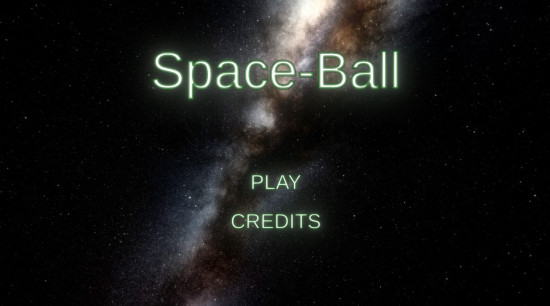
Description
Space-Ball is a game developed as part of a class assignment completed in 2021. The project was created specifically for educational purposes and served as a homework task for students enrolled in a game development course. The main goal of this assignment was to provide hands-on experience with game creation using the Unity engine and to reinforce practical skills taught during lessons.
Development Context
The game was built following a structured tutorial provided on the official Unity learning platform. The tutorial guided students through the process of creating a simple interactive game from scratch. By following these step-by-step instructions, students were able to understand the basic components of Unity, including scene setup, object manipulation, scripting, and game mechanics implementation.
Gameplay Mechanics
In Space-Ball, players interact with a digital environment where the primary objective involves controlling a ball in a space-themed setting. The tutorial provided foundational scripts and instructions, which were adapted during the class project to create functional gameplay. The mechanics emphasize physics-based movement and collision detection, allowing players to experience realistic responses as the ball navigates through various obstacles and challenges.
Technical Implementation
The project utilizes Unity version 2020.1, ensuring compatibility with the tutorial materials provided. The development process included creating and configuring game objects, applying physics components, and programming basic interactions through C# scripts. These tasks were essential for students to learn core Unity functionalities, including Rigidbody handling, collision events, and scene management. By completing these steps, students gained practical knowledge about how game objects behave in a 3D space and how to program interactive features effectively.
Learning Objectives
The class project aimed to reinforce key concepts of game development. Students learned to apply theoretical knowledge in a practical scenario, gaining experience with:
- Unity interface navigation and scene creation
- Object placement and physics configuration
- Scripting player controls and object interactions
- Debugging and testing gameplay functionality
- Following step-by-step instructional content to achieve a functional final product
Educational Significance
Space-Ball serves as a demonstration of a successful educational project that combines instruction and practice. It provides a clear example of how tutorials can be applied in a classroom setting to help students achieve concrete results. The project emphasizes learning by doing, ensuring that participants not only follow instructions but also understand the reasoning behind each action in the development process. Students are encouraged to experiment with variations in gameplay and object behavior, deepening their comprehension of interactive design principles.
Conclusion
Overall, Space-Ball (2021) represents a class project developed through a guided Unity tutorial. It focuses on practical application of game development concepts, emphasizing physics-based mechanics, object control, and interactive design. The project provided students with valuable hands-on experience, enabling them to strengthen their technical skills and apply theoretical knowledge in a tangible, playable format. By completing this project, students gained insight into the complete workflow of creating a functional game in Unity, from initial setup to testing and refinement.