

Traxx (1983)

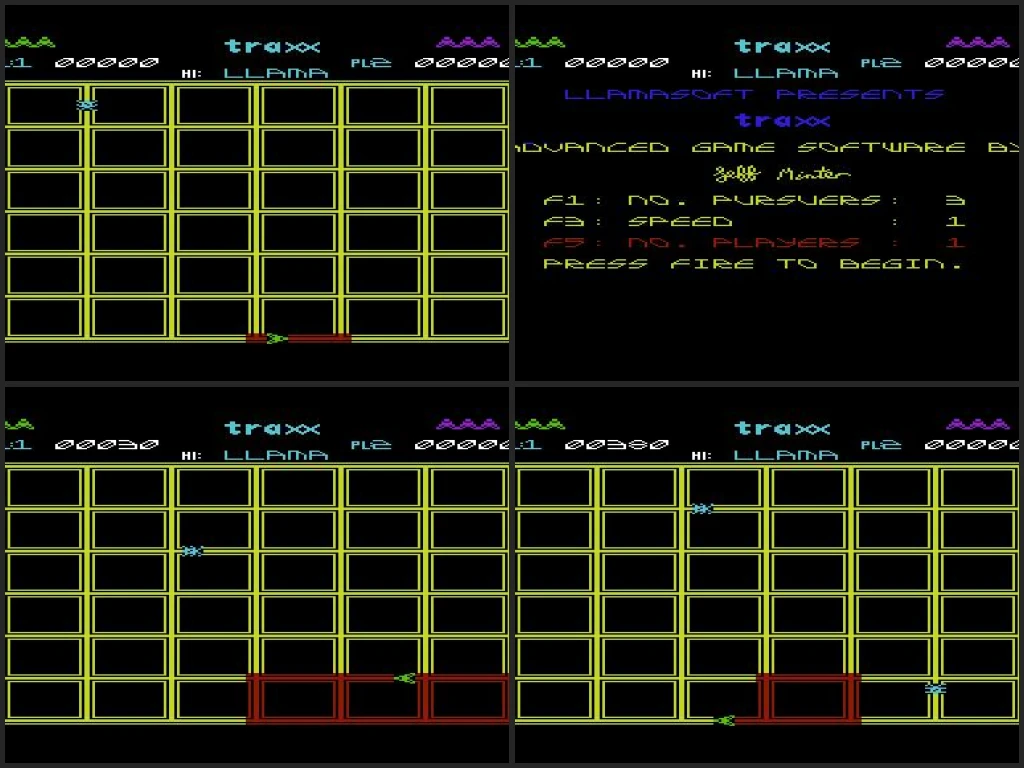
Description
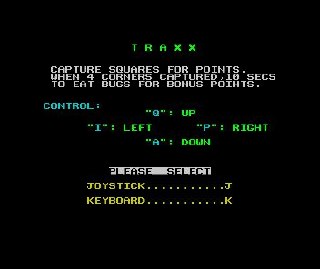
Traxx, released in 1983, is a computer game developed and published for the ZX Spectrum and the Commodore VIC-20. The title was created by Quicksilva and designed as a home-computer adaptation conceptually rooted in the mechanics of the well-known arcade game Amidar. The project delivered a simplified yet recognizable interpretation of its inspiration, focusing on grid-based movement and pattern-completion gameplay that matched the technical constraints of early consumer hardware.
Gameplay Structure
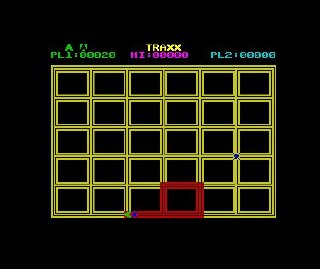
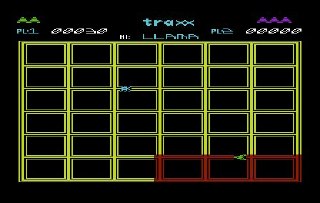
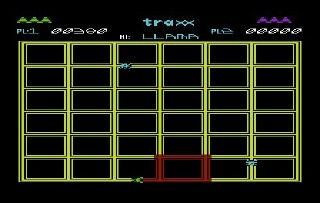
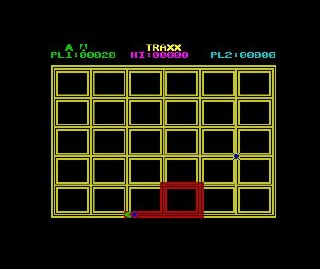
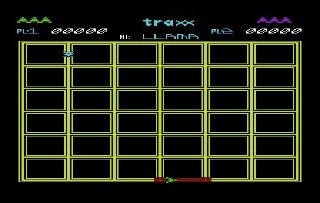
The core objective in Traxx is structured around navigating a predefined field composed of intersecting lines. Players must guide the on-screen marker along these paths to highlight and complete sections of the grid. Successful movement across unmarked segments fills them in, and the stage is cleared once the entire network is traversed without omission. The flow of movement follows strict directional control, requiring precise timing and careful planning to avoid dead ends and interruptions.
Mechanics and Obstacles
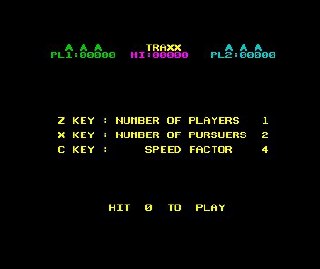
While progressing through each layout, players encounter adversarial elements moving according to fixed patterns. These opponents introduce continuous pressure and require the player to maintain awareness of their positions while completing the grid. Contact with these moving hazards results in loss of a life, forcing the player to restart the attempt while retaining the mandatory goal of tracing every line segment. The increased speed and density of obstacles in later stages provide rising difficulty and demand precise command inputs.
Platform Characteristics
The ZX Spectrum version features color-coded line segments and simple but responsive controls aligned with the system’s keyboard input. The Commodore VIC-20 edition offers similar mechanics, adapted for its graphical limitations. Both platforms deliver the same core rule set, ensuring that gameplay remains consistent regardless of hardware differences. Each release makes use of straightforward audio signals to indicate movement, failures, and the completion of objectives.
Overall Structure and Legacy
Traxx stands as a representative example of early 1980s home-computer adaptations derived from contemporary arcade formats. It emphasizes spatial coverage, pattern completion, and obstacle avoidance through an accessible design that retains the recognizable structure of its arcade predecessor while optimizing it for domestic hardware capabilities. Its minimalistic presentation reflects the technical era in which it was produced, focusing entirely on functional gameplay and clear progression without extraneous elements.