

The Pit (1982)
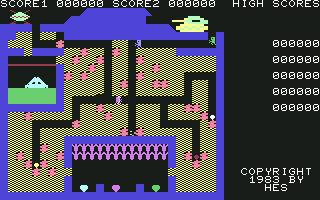
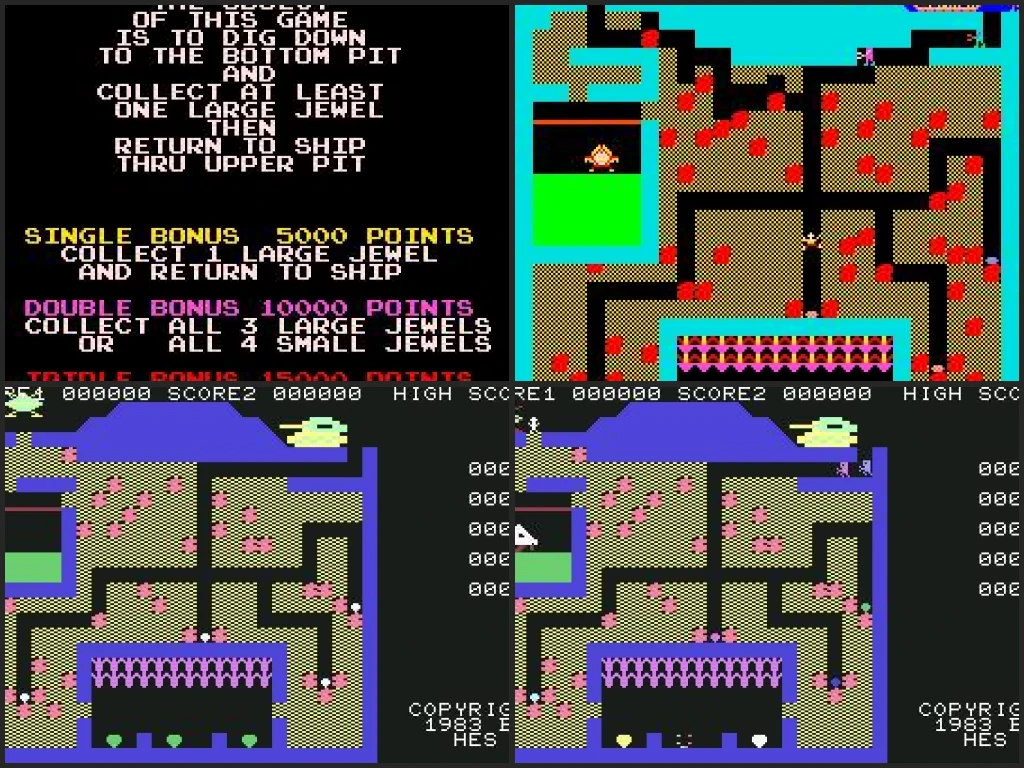
Description
The Pit is an action and strategy video game released in 1982, developed by AW Electronics. The game was distributed by Centuri in the United States, Taito in Japan, and by Zilec/Zenitone in the United Kingdom. It gained attention for combining fast-paced gameplay with strategic elements, offering a unique experience for arcade players of its era.
Gameplay Mechanics
In The Pit, the player’s main goal is to navigate through a complex underground labyrinth. The objective is to locate and retrieve a valuable gem hidden deep within the maze. Once the gem is obtained, the player must successfully exit the labyrinth to complete the level. The game requires both quick reflexes and careful planning to avoid obstacles and enemies that populate the underground environment.
Players control their character from a top-down perspective, moving through tunnels and pathways filled with hazards. Timing and strategy are essential, as incorrect movements can lead to the player being trapped or eliminated by in-game threats. This combination of action and strategy set The Pit apart from other arcade titles of the early 1980s, which often focused solely on reflex-based gameplay.
Influence and Legacy
The design and mechanics of The Pit had a lasting impact on the video game industry. Notably, a similar game created by Chris Gray inspired Peter Liepa to develop the well-known title Boulder Dash. This connection highlights the significance of The Pit in influencing later games that blended action with puzzle-solving elements.
The game is remembered for its innovative approach to combining arcade-style action with strategic thinking. The balance between rapid gameplay and careful planning required players to adapt quickly to changing conditions within the labyrinth, making it both challenging and engaging.
Release and Distribution
The Pit saw international distribution through multiple publishers. In the United States, it was released by Centuri, while Taito handled its distribution in Japan. In the United Kingdom, the game was published by Zilec/Zenitone. The widespread release contributed to the game's popularity and allowed it to reach a diverse audience of arcade players.
Game Design
The underground labyrinth of The Pit is designed to challenge players both strategically and tactically. The gem retrieval objective provides a clear goal, while the maze layout introduces complexity and unpredictability. Players must navigate carefully, avoiding obstacles and timing their movements precisely to succeed. This design created a compelling gameplay loop that encouraged repeated attempts to master each level.
Conclusion
The Pit remains a notable example of early 1980s arcade games that successfully combined action and strategy. Its gameplay centered around descending into a maze, acquiring a gem, and escaping while managing hazards, influenced subsequent titles like Boulder Dash. The international distribution by Centuri, Taito, and Zilec/Zenitone ensured that it reached a broad audience, solidifying its place in arcade history.
With its challenging labyrinth design, strategic gameplay requirements, and influence on future game development, The Pit continues to be recognized as an important early arcade title that merged reflex-driven action with thoughtful planning, leaving a lasting legacy in the action-strategy genre.