

NeverDead (2012)
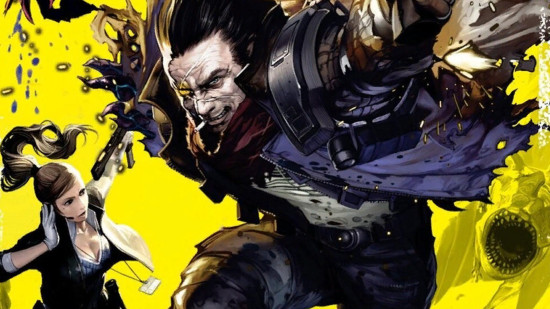
Description
NeverDead (2012) presents the story of Bryce Boltzmann, a man who has endured over five centuries of existence following a catastrophic event caused by Astaroth, the Demon King. Bryce’s life was irrevocably changed when his wife was brutally murdered, leaving him defeated and cursed with immortality. As a result, he now exists in a state detached from ordinary human ambitions, focused only on survival and seeking temporary relief in alcohol.
Plot and Setting
The game unfolds in a world where demonic forces have a tangible presence, and the balance between humanity and otherworldly entities is constantly threatened. Bryce, despite his detached demeanor, becomes an active participant in combating these forces. His journey is intertwined with the National Anti-Demon Agency, a secretive organization dedicated to eliminating demonic threats. Through this affiliation, Bryce takes on missions that challenge both his physical endurance and tactical intelligence, often alongside his capable agency partner, Arcadia.
Main Character: Bryce Boltzmann
Bryce is distinguished not only by his immortality but also by the way it shapes his perspective on life. His experiences over centuries have rendered him emotionally distant and pragmatic. The loss of his wife continues to influence his actions, serving as both a motivation for vengeance against demonic entities and a barrier to personal fulfillment. Players navigate the game controlling Bryce as he faces relentless adversaries, requiring constant adaptation to changing combat situations and environmental hazards.
Gameplay Mechanics
NeverDead features innovative gameplay that emphasizes Bryce’s immortality as a core mechanic. Unlike typical characters, he cannot be permanently killed. This allows players to experiment with strategies, including extreme damage and dismemberment, as Bryce can survive injuries that would be fatal to ordinary humans. The game’s mechanics involve utilizing dismemberment tactically, manipulating limbs, and exploiting enemy vulnerabilities. These systems create dynamic combat scenarios that demand both strategy and improvisation.
Combat and Strategy
Combat in NeverDead blends action-oriented engagement with strategic problem-solving. Players must manage Bryce’s abilities effectively, coordinating attacks with Arcadia during missions. Demons vary in strength and tactics, requiring the player to adjust strategies accordingly. The game encourages creative approaches, including the separation and reattachment of body parts, turning Bryce’s immortality into a tactical advantage. This unique feature distinguishes NeverDead from other action titles, offering a gameplay experience built around persistence and adaptation.
Partnership and Team Dynamics
Arcadia, Bryce’s agency partner, plays a critical role in both narrative and gameplay. Her presence complements Bryce’s combat capabilities, providing support and tactical assistance during missions. The partnership highlights the cooperative dynamics necessary for success against demonic adversaries. Players must coordinate actions, balance offensive and defensive maneuvers, and leverage both characters’ skills to progress effectively. The interplay between Bryce and Arcadia reinforces the story’s themes of redemption and persistence.
Mission Structure and Objectives
Each mission in NeverDead is designed to challenge the player’s strategic thinking and mastery of the combat system. Objectives often involve the elimination of demonic forces, protection of allies, or exploration of hostile environments. The game’s structure integrates story progression with gameplay challenges, ensuring that the narrative unfolds alongside increasingly complex encounters. Players are encouraged to experiment with tactics and fully utilize Bryce’s unique abilities to overcome obstacles and achieve mission goals.
Immortality as a Core Element
Bryce’s immortality is not merely a narrative detail but a foundational gameplay element. It allows for a continuous cycle of action and recovery, where failure does not result in permanent loss. Instead, players can leverage injury and dismemberment strategically, creating a distinct combat rhythm. This mechanic adds depth to both tactical planning and player engagement, making NeverDead a unique experience in the action-adventure genre.
Visual and Environmental Design
The game’s environments reflect the dark and chaotic world dominated by demonic influences. Levels are crafted to support dynamic combat and interaction with the environment. Players encounter diverse landscapes, from urban settings to supernatural arenas, each presenting unique challenges. The visual design emphasizes contrast between Bryce’s resilience and the destructive nature of his adversaries, reinforcing the central narrative of survival and confrontation with demonic threats.
Conclusion
NeverDead (2012) combines a rich narrative of loss, vengeance, and immortality with innovative gameplay mechanics centered on a protagonist who cannot die. Bryce Boltzmann’s journey through centuries of existence, alongside the National Anti-Demon Agency and his partner Arcadia, offers players a unique blend of action, strategy, and storytelling. The game’s focus on tactical dismemberment, cooperative dynamics, and continuous adaptation makes it a distinct entry in the action-adventure genre, delivering both challenge and narrative depth to those who engage with its dark, immersive world.
Our Verdict
NeverDead is a wild ride with a unique twist: you can lose limbs and keep fighting. The story is strange but entertaining, with Bryce’s immortality leading to some fun and over-the-top moments. Combat is messy but can be satisfying if you enjoy chaotic action.
That said, the controls feel clunky at times, and the level design can be confusing. The humor and oddball style won’t be for everyone, but fans of quirky action games may find it charming. Overall, it’s a game with personality, even if it’s rough around the edges.
We recommend NeverDead if you like unusual, over-the-top action games and don’t mind a few rough spots. It’s not perfect, but it’s memorable and fun in its own strange way.