

Grand Ages: Medieval (2015)
Genres: RPGStrategySimulation
Tags:
SingleplayerSteam AchievementsMultiplayerFull controller supportSteam Cloudsteam-trading-cardsGreat SoundtrackOpen WorldSandboxstatsWarHistoricalMedievalRTSManagementachievementsResource ManagementEconomyCity BuilderGrand StrategyPoliticalTradingPolitics
Description
Overview
Grand Ages: Medieval is a comprehensive real-time strategy game developed by Gaming Minds and published by Kalypso, forming part of the acclaimed "Grand Ages" series. Unlike the 2009 release "Grand Ages: Rome," which centered on city-building within a classical RTS framework, this title expands its scope to a continent-spanning empire simulation. Players manage trade, exploration, technological advancement, and military campaigns, emphasizing economic and political domination during the High Middle Ages.
Game Setting
The game is set in the year 1050 AD, a period marking the High Middle Ages in Europe. This era saw rapid population growth, extensive settlement expansion, and the establishment of long-distance trade networks. Players begin as the leader of a modest settlement and are tasked with transforming it into a powerful empire. The game world stretches from Scandinavia and North Africa in the north and south, to Portugal, the Caucasus, and the Middle East in the west and east, encompassing over 20 million square kilometers of interactive terrain.
Core Gameplay
Players are responsible for founding cities, managing resources, and defending territories against rival factions. The game requires strategic city placement to maximize resource efficiency and military strength. Essential activities include:
- Producing and trading a variety of goods, such as coal, fruits, pottery, and other commodities essential to sustaining both civilian populations and military forces.
- Researching and implementing over 50 significant technological advancements of the medieval period, including innovations like three-field crop rotation, low warp looms, and the longbow.
- Building and commanding armies comprised of knights, archers, and cavalry units to defend your holdings and expand your influence through conquest.
- Responding to natural disasters and challenges such as storms, fires, volcanic eruptions, droughts, earthquakes, and outbreaks of the Black Death, which impact both population and economy.
Exploration and Expansion
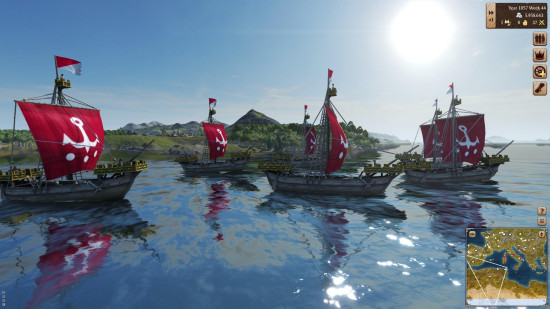
Exploration is a critical aspect of Grand Ages: Medieval. Players navigate a vast world, discover new territories, and engage with other civilizations. Trade plays a pivotal role, requiring careful management of supply chains and strategic alliances. Expansion is achieved through the establishment of new settlements and the development of prosperous trade routes, ensuring a steady flow of resources and increasing the overall influence of your empire.
Military and Diplomacy
Strategic warfare and diplomacy are integral to success. Players raise armies, defend cities, and conduct offensive operations to subjugate rival factions. The game emphasizes the importance of balancing military power with economic stability and technological growth. Diplomacy with neighboring societies allows for trade agreements, alliances, and conflict resolution, providing multiple paths to achieving dominance over Europe.
Technological Progress
Technological research drives advancement within the game. Players unlock over 50 major innovations that influence agriculture, industry, military capability, and urban development. Implementing these technologies effectively enhances production efficiency, strengthens armies, and facilitates the growth of prosperous cities capable of sustaining large populations and complex economies.
Game Modes
Grand Ages: Medieval offers multiple modes to suit different play styles:
- Campaign Mode: Follow a structured storyline with detailed cut-scenes and missions, guiding your settlement from humble beginnings to continental dominance.
- Free Play: Explore the game world without restrictions, developing your empire according to your own strategies and objectives.
- Multiplayer Mode: Engage in competitive gameplay with up to eight players, testing economic management, military tactics, and strategic planning against human opponents.
Conclusion
The game combines city management, strategic planning, and real-time tactical combat to create a detailed simulation of medieval empire-building. By balancing trade, research, military development, and diplomatic relations, players can guide a small settlement to become a dominant power in Europe, experiencing the complexity and challenges of the High Middle Ages on a grand scale.
Our Verdict
Grand Ages: Medieval is a solid strategy game that lets you build, trade, and expand your empire in a huge medieval world. The mix of city management, economic planning, and military action keeps the gameplay interesting from start to finish. Exploring new lands and developing technology feels rewarding, and the scale of the map is impressive.
However, the game can feel slow at times, and learning all the systems may be challenging for newcomers. Multiplayer adds extra fun, but it’s not essential to enjoy the core experience. The visuals and historical touches make it feel alive, even if it doesn’t break new ground in the genre.
Overall, if you enjoy deep strategy and empire-building, we recommend Grand Ages: Medieval. It’s not perfect, but it delivers a rich medieval world and hours of thoughtful gameplay.