

Metro 2033 (2010)
Genres: ActionShooter
Tags:
SingleplayerSteam AchievementsFull controller supportSteam CloudAtmosphericGreat SoundtrackStory RichFirst-PersonSci-fiHorrorFPSSurvivalStealthDarkSurvival HorrorPost-apocalypticLinear3D VisionBased On A NovelBenchmark
| PC |
Released: 2010-03-16Requirements
|
||||||||||||||||||||||||||||||||||||||||||
| Xbox 360 |
Released: 2010-03-16 |
||||||||||||||||||||||||||||||||||||||||||
Description
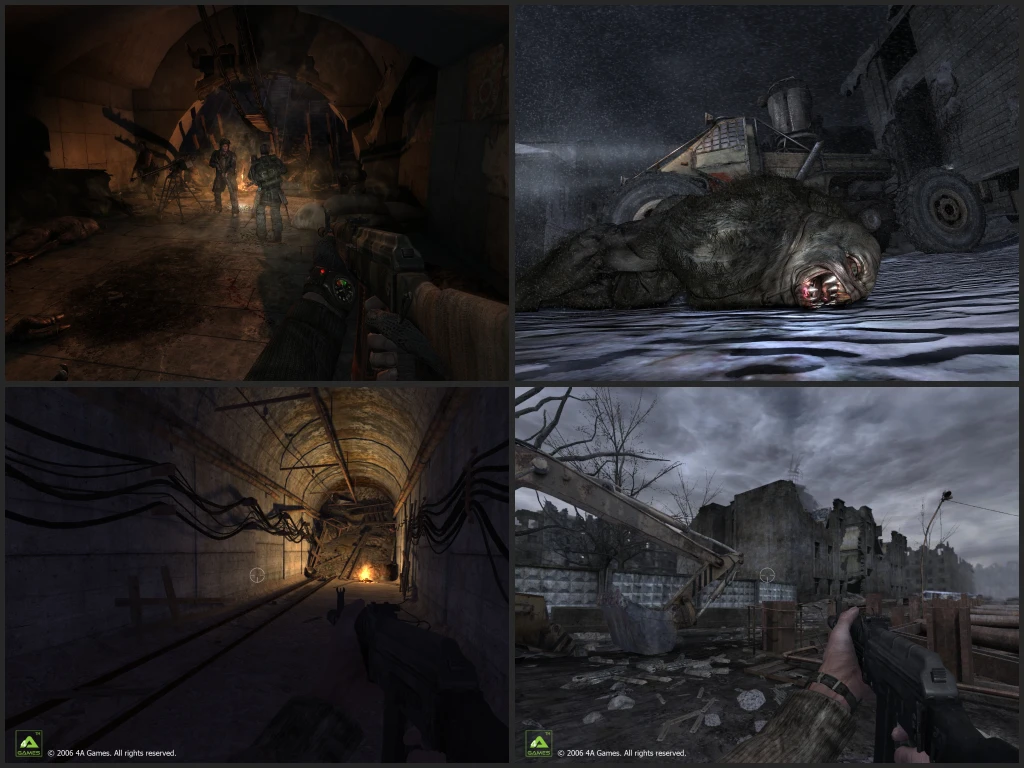
Unlike typical post-apocalyptic narratives set in open, desolate wastelands, Metro 2033 situates its story entirely within the confined and perilous Moscow Subway system. Here, survivors of nuclear and chemical devastation have found refuge underground. Players assume the role of Artyom, a resident of the VDNKh station and the adoptive son of its station commander. Artyom embarks on a critical mission to transport vital information regarding the mysterious Dark Ones to the Polis, the central hub of the subway network, after a Spartan operative known as Hunter disappears during an investigation into the Hive, the enigmatic dwelling of the Dark Ones.
Gameplay and Setting
The game emphasizes a claustrophobic atmosphere created by the dark, broken subway tunnels, where alliances between survivors are fragile and survival depends on careful navigation of the underground world. Following the narrative of the original Metro 2033 novel, the game introduces a unique economic system where bullets serve as currency. Players can exchange different types of ammunition, although inaccurate shooting results in wasted rounds, adding an extra layer of strategy to combat encounters.
Metro 2033 is primarily a first-person shooter, allowing players to witness the collapse of human society while exploring both the ruined urban environment above and the underground settlements. The game presents multiple threats: in addition to mutants and hostile creatures, human adversaries, including bandits, Communists, and Nazis, challenge the player throughout the journey. This variety in enemies, combined with stealth sections, creates a complex combat experience that requires careful planning and execution.
Combat and Mechanics
The combat system in Metro 2033 balances traditional FPS mechanics with survival elements. Ammunition scarcity, the use of bullets as currency, and the need for strategic exchanges create tension in both exploration and firefights. The game encourages players to manage resources carefully, making each encounter potentially life-threatening. Stealth elements complement direct combat, allowing players to avoid detection or set up tactical advantages against both human and mutant enemies.
Atmosphere and Narrative
The game’s setting captures the stark contrast between the remnants of the surface world and the subterranean life of Moscow’s subway stations. Artyom’s journey emphasizes not only survival but the fragile social dynamics among the underground communities. Players experience firsthand the complex relationships between different survivor factions and the constant threat posed by both monsters and rival humans. The narrative closely mirrors the source material, providing a faithful adaptation of the novel’s plot and tone.
Exploration and Environment
Exploration is a key element of Metro 2033. Players navigate through dark tunnels, abandoned stations, and the devastated city above, uncovering the remnants of human civilization and encountering dangers along the way. Environmental storytelling plays a significant role, with visual and audio cues enhancing the sense of isolation and threat in the underground world. The ruined architecture and claustrophobic corridors amplify tension and immerse players in a world struggling to survive after global catastrophe.
Enemies and Challenges
The game presents a diverse range of adversaries. Mutants and creatures from the Hive provide constant physical threats, while hostile humans, including historical enemy archetypes such as bandits, Communists, and Nazis, introduce strategic challenges in combat. Stealth, resource management, and tactical planning are essential for survival. Each faction behaves differently, demanding players adapt their strategies to navigate the political and physical dangers of the subway network.
Conclusion
Metro 2033 offers a unique blend of first-person shooting, survival mechanics, and narrative-driven exploration. The game emphasizes tension, strategy, and immersion, allowing players to experience a post-apocalyptic world constrained to the subterranean tunnels of Moscow. By integrating bullets as currency, a variety of enemy types, and a faithful adaptation of the original novel’s storyline, the game creates a compelling and challenging environment where every decision carries significant consequences.