

Deathmatch Classic (2001)
Genres: Action
Tags:
MultiplayercooperativeFirst-PersonSci-fiFPSClassicValve Anti-Cheat enabledArena Shooter
| macOS |
Released: 2001-06-01Requirements
|
||
| Linux |
Released: 2001-06-01Requirements |
||
| PC |
Released: 2001-06-01Requirements |
Description
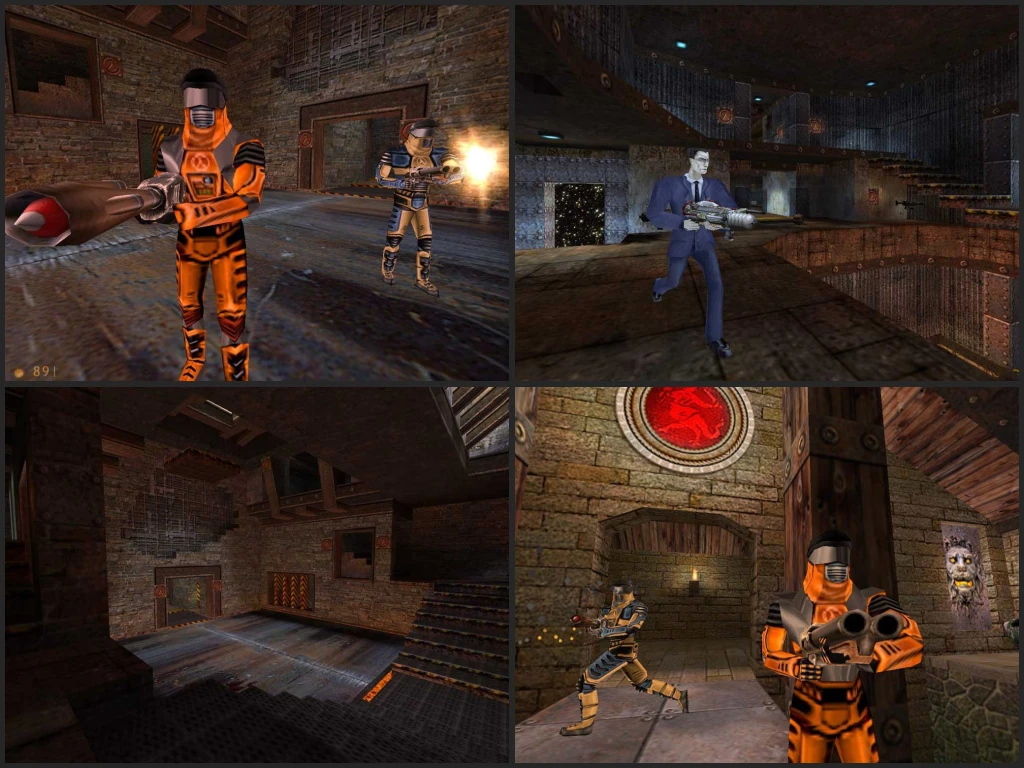
Deathmatch Classic is a standalone multiplayer game developed by Valve, initially designed as a tribute to the iconic first-person shooter, Quake, created by Id Software. Released in 2001, this title focuses on fast-paced, action-packed deathmatch gameplay, staying true to the spirit of Quake while incorporating elements unique to Valve’s game design. The game is set apart by its distinctive approach to weapons, player movement, and the absence of a loadout system, making it a memorable experience for players who crave a pure and competitive shooter environment.
The Quake Remake Experience
At its core, Deathmatch Classic serves as a remake of Quake, designed to offer players a familiar yet fresh experience. When it was first launched, the game included five maps that were directly ported from Quake, offering nostalgic fans a chance to revisit classic locations in a new light. The gameplay itself mirrors Quake in many aspects, particularly with its fast-paced, run-and-gun mechanics. However, there are subtle differences in the way the game plays, especially in terms of weapons and movement.
Distinctive Weapons and Movement
One of the most noticeable differences between Deathmatch Classic and Quake is the weaponry. While Quake featured a variety of guns, Deathmatch Classic introduces a twist with some weapons borrowed from the Half-Life universe. Notably, the iconic crowbar from Half-Life replaces Quake’s axe, offering players a new weapon option for close-quarters combat. Beyond the crowbar, Deathmatch Classic also features a range of powerful weapons, including a shotgun, rocket launcher, taser, and a devastating beam weapon, all of which are scattered throughout the game’s maps for players to collect.
The game’s physics system draws inspiration from Quake, allowing players to perform fast bunnyhopping maneuvers that enable rapid movement across the map. This feature, closely tied to the game engine’s similarities with Quake, creates a dynamic gameplay experience that emphasizes speed and agility. However, while the physics are similar, Deathmatch Classic’s overall game speed is slightly slower compared to Quake, which can impact the flow of matches in subtle but important ways.
Weapon Pickups and Power-ups
Deathmatch Classic does not feature a traditional loadout system, which means players must rely on the weapons and items scattered throughout each map. This approach forces players to adapt to their environment, making map knowledge and strategic positioning critical to success. The available weapons are varied, catering to different playstyles and tactics. Whether you prefer close-range combat with the crowbar or long-range assaults with the rocket launcher, the game offers plenty of options for all types of players.
In addition to weapon pickups, the game features several power-ups that can turn the tide of a match. These bonuses grant temporary but powerful abilities that provide a distinct advantage over opponents. Players can obtain invincibility, making them immune to damage for a short period; invisibility, which allows them to move undetected; or quad damage, which significantly boosts their damage output. These power-ups add an extra layer of strategy, encouraging players to fight for control of key areas on the map and to time their usage for maximum impact.
Fast-Paced, Pure Deathmatch Fun
Ultimately, Deathmatch Classic is designed for players who enjoy fast, no-holds-barred action. The game’s emphasis on skill, movement, and map knowledge makes it a great choice for competitive play, while its simple yet effective mechanics ensure that it remains accessible to newcomers. The lack of a complex progression system or loadouts keeps the focus squarely on the action, allowing players to jump in and enjoy the intense combat without having to worry about leveling up or unlocking new abilities.
While the game may not have reached the same level of popularity as some of Valve’s other titles, such as Half-Life or Counter-Strike, Deathmatch Classic remains a fondly remembered entry in the company’s catalog. For fans of Quake, Half-Life, or old-school first-person shooters in general, it provides an exciting and nostalgic trip down memory lane, offering the thrill of fast, skill-based combat in a competitive deathmatch setting.