

The Guild II Renaissance (2010)
Genres: StrategySimulation
Tags:
SingleplayerMultiplayerRPGOpen WorldSandboxHistoricalMedievalManagementResource ManagementEconomyCity BuilderTradingPoliticssubmarine
| PC |
Released: 2010-07-22Requirements
|
Description
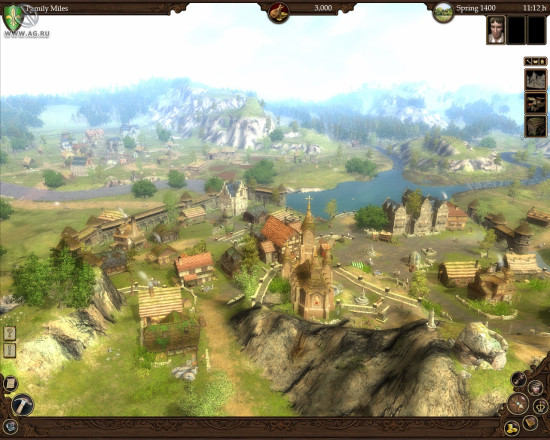
The Guild II Renaissance is a complex role-playing experience that incorporates elements of real-time strategy and life simulation. Serving as a stand-alone expansion for the original 2006 release The Guild II, this edition extends the depth and breadth of gameplay, offering new features, scenarios, and gameplay refinements while maintaining the core mechanics that fans appreciate.
Setting and Context
The game is set in Europe during the early 15th century, immersing players in a historically inspired environment. The focus is on the life of a prominent townsman within a bustling town, allowing the player to navigate social, economic, and political dynamics. Players start by creating their character, defining appearance and personal traits, and selecting a specialization that determines available professions and initial skills.
Character Development and Specialization
The specialization system acts as the equivalent of an RPG class structure. Each specialization guides the player in choosing from multiple professions, directly affecting what activities can be performed and which buildings can be constructed. Character growth is closely tied to skill progression and career choices, enabling the player to shape the character’s journey according to strategic and personal preferences.
Gameplay Mechanics
The core gameplay revolves around economic management and dynasty-building. Players begin with minimal capital and property, and must utilize their skills to earn money and expand their influence. Income can be invested in acquiring new buildings, hiring workers, and developing a thriving enterprise. Establishing a family is another crucial element, as children eventually take over family leadership, ensuring continuity of the player’s legacy through successive generations.
Game Modes and Objectives
There are four distinct game modes, each focused on creating and maintaining a prosperous dynasty. Gameplay emphasizes strategic planning, economic management, and social interactions. Success is measured not only by wealth accumulation but also by the growth of family status and the expansion of properties and businesses over time. Players must carefully balance personal development, family responsibilities, and business expansion to achieve long-term objectives.
New Features and Enhancements
The Guild II Renaissance introduces several enhancements that expand the original game’s scope:
- Eight new professions to choose from, increasing the variety of career paths.
- New building types that provide additional strategic options for economic growth.
- Three new scenarios, each presenting unique challenges and objectives.
- Expanded map size, nearly four times larger than in the original, allowing for more exploration and strategic planning.
- Enhanced graphics and interface improvements for smoother gameplay experience.
- Adjustable difficulty settings to tailor the challenge according to player preference.
- Gameplay tweaks that refine existing mechanics, improve balance, and provide a more immersive experience.
Economic and Social Simulation
Economic management forms the backbone of the game. Players engage in trade, craft production, and business management to increase wealth and social influence. Hiring and managing staff is crucial, as well as investing in infrastructure to expand operations. Social interactions are equally important, as maintaining a strong reputation in the town enhances opportunities and facilitates alliances or political influence.
Family Legacy
A central theme in The Guild II Renaissance is the creation of a lasting family legacy. Players raise children who inherit businesses and continue the family’s social and economic prominence. This intergenerational gameplay adds depth, requiring long-term planning and strategic decisions that extend beyond the lifespan of a single character. Ensuring a prosperous future for the dynasty is a continuous challenge that integrates seamlessly with economic and social objectives.
Conclusion
Overall, The Guild II Renaissance offers a detailed and strategic role-playing experience set in a richly detailed historical context. It combines character development, economic management, and family legacy in a seamless simulation, with additional content and improvements enhancing the original game. With expanded professions, larger maps, and refined gameplay mechanics, it provides both new and returning players with a comprehensive and engaging simulation of medieval town life.
Our Verdict
The Guild II Renaissance offers a unique mix of role-playing, strategy, and life simulation set in 15th century Europe. You can shape your character, choose a specialization, and slowly build a dynasty from scratch. The game rewards patience and careful planning, making each decision feel meaningful.
While the visuals feel dated and the learning curve can be steep, the expanded map, new professions, and added scenarios make this stand-alone add-on a worthwhile experience for fans of the series or anyone who enjoys slow-paced strategy with a personal touch. It’s not for everyone, but it’s solid and engaging for the right audience.
We recommend The Guild II Renaissance if you enjoy detailed economic simulation, character progression, and long-term strategy. If you prefer fast-paced action or modern graphics, this one might not click for you.