

Emily is Away (2015)
Genres: AdventureSimulationCasualIndie
Tags:
SingleplayerSteam Achievementssteam-trading-cardsStory Rich2DFunnyFree to PlayPixel GraphicsRetroShortChoices MatterVisual NovelIlluminatiRomanceChoose Your Own AdventureDating SimInteractive FictionText-Based
| Linux |
Released: 2015-11-20 |
||||||||
| PC |
Released: 2015-11-20Requirements
|
||||||||
| macOS |
Released: 2015-11-20Requirements
|
Description
Overview
Emily is Away is an independently developed visual novel created by Kyle Seeley. The game explores the dynamics of personal relationships and communication through a nostalgic lens, reflecting the early 2000s digital environment. It presents a focused narrative centered on a long-term connection between the protagonist and a character named Emily, offering players an experience rooted in dialogue and interpersonal choices, though the story follows a largely linear path.
Storyline
The narrative follows the relationship between the main character and Emily over a period of five years, beginning in the early 2000s. The game delves into their evolving interactions, emotions, and experiences during their high school years. Players witness the development of their friendship, occasional conflicts, and the nuanced dynamics of adolescent communication. The story emphasizes realistic dialogue and situational scenarios rather than branching storylines, focusing on capturing the authenticity of early online interactions.
Gameplay Mechanics
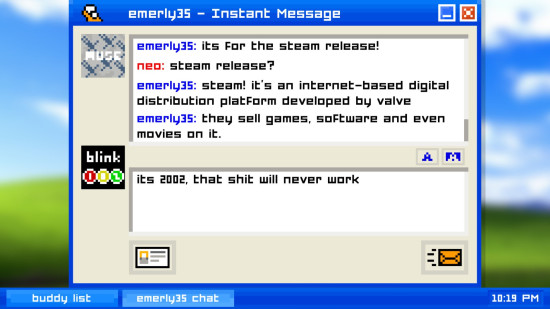
Unlike many visual novels, Emily is Away features a primarily linear progression. Players interact through a chat interface designed to mimic an early 2000s messaging client, resembling the look and feel of Windows XP. The game interface includes user profile icons, desktop icons, and other familiar digital artifacts from that era, creating an immersive nostalgic environment. Players can select messages to send, simulating real-time chat, but the overarching plot remains largely predetermined.
Interaction and Choices
During gameplay, players engage in conversations primarily with Emily, whose nickname evolves from "emilyluv" to "emerly." Dialogue options allow players to navigate discussions about high school experiences, personal feelings, and social challenges. Players also encounter interactions with classmates and friends, providing context and depth to the narrative. Key events include discussions about mutual acquaintances, handling teasing or harassment from classmates such as Brad, and responding to social invitations like a party planned by another classmate, Travis. Players can choose to attend these events with Emily or make different decisions, influencing the immediate tone and nature of conversations.
Visual and Cultural References
The game includes numerous references to early 2000s pop culture, both through visual elements and thematic content. User profile icons often reference internet memes of the time, while desktop icons reflect the protagonist’s interests in media such as the film "28 Days Later," the "Lord of the Rings" series, and the music of Red Hot Chili Peppers. These details enrich the authenticity of the setting, providing a nostalgic experience for players familiar with that period. Profile icons are also customizable, allowing players to express evolving personal tastes as the game progresses.
Overall Experience
Emily is Away combines a straightforward narrative structure with detailed environmental and cultural cues to create a compelling simulation of early online communication. Its focus on dialogue, realistic interactions, and period-specific references captures the essence of adolescent digital relationships while remaining true to the source material. The game emphasizes personal connection, memory, and the subtle impact of choices in everyday interactions, all within the familiar framework of a classic instant messaging interface.
Our Verdict
Verdict: If you're looking for a nostalgic trip back to the early 2000s, Emily is Away delivers that in spades. The game lets you experience a linear but engaging story about a relationship that develops over time, all wrapped in a familiar online chat interface. Its simple, nostalgic design and subtle pop-culture references are great for those who want a quick, sentimental experience.
However, the gameplay is limited. The plot doesn't offer much room for player choice or exploration, which could leave some looking for more depth. It’s a charming, one-time playthrough for fans of visual novels or early 2000s nostalgia, but don't expect anything groundbreaking in terms of interaction or complexity. Recommended for casual players or those in need of a quick, emotional story.