

Lord of Rigel
Genres: StrategyIndie
Tags:
SingleplayerSci-fiSpaceTurn-Based Strategy4X
Description
Shape the Galaxy
Lord of Rigel is a turn-based 4X strategy game that focuses on exploring, expanding, exploiting, and exterminating within a vast and complex galaxy. Players are tasked with guiding their chosen civilization through a galaxy fragmented by an ancient cold war. Strategic choices determine the survival and growth of your species as you navigate a universe filled with rival races, political intrigue, and potential cosmic threats. Form alliances to withstand looming conflicts or uncover hidden pathways of ascension feared by the elder civilizations. Success requires careful management of both internal resources and external threats.
Species
Players can select from ten distinct playable races, each with unique traits, behavioral patterns, and leadership styles. These races interact with two dominant elder civilizations and numerous minor species, each offering unique resources and technologies. Decisions regarding protection, exploitation, or integration of these minor species significantly impact the development of your empire and the balance of power within the galaxy. Understanding each race's capabilities and tendencies is crucial for crafting a long-term strategy.
End Game
The ultimate goal is to shape the destiny of the galaxy through the acquisition and use of rare strategic resources. These resources can be employed to construct massive structures such as Dyson spheres, develop doomsday-level weapons, or unlock advanced evolutionary secrets. Strategic resource management and tactical foresight are essential for achieving dominance or survival in the later stages of the game. The endgame challenges players to leverage every aspect of their civilization’s strengths while mitigating potential weaknesses.
Diplomacy
Diplomatic strategy plays a central role, allowing players to influence Galactic Council politics through negotiations, trade treaties, alliances, and the creation of client states. Each species possesses leaders with distinct personalities, decision-making styles, and cultural traditions that shape diplomatic outcomes. Effective diplomacy requires balancing competing interests, forging strategic partnerships, and anticipating the actions of rival civilizations to secure long-term advantages for your empire.
Espionage
Espionage offers opportunities to operate a covert network to destabilize opponents and gain strategic advantages. Players can sabotage enemy fleets, damage infrastructure, steal advanced technology, manipulate political climates by inciting rebellions, or eliminate key leaders. Building and maintaining an effective spy network allows a civilization to influence events behind the scenes, often determining the outcome of conflicts without direct military engagement. Espionage is a critical tool for those seeking subtle control over the galaxy.
Fleet Combat
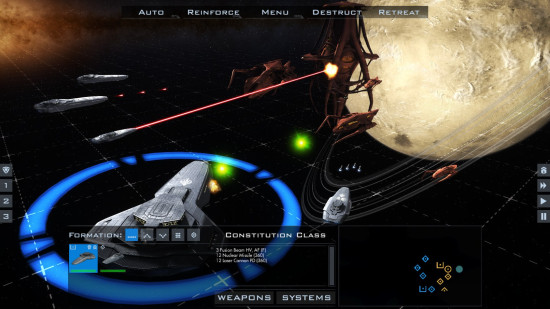
Combat occurs in real-time and rewards tactical decision-making and careful positioning. Players must utilize smaller ships to flank larger enemy vessels and exploit weak points in armor or subsystem vulnerabilities. Targeting specific systems such as weapons, shields, engines, and computers can disable opponents and provide strategic advantages. Onboard marines can be deployed for ship raids or to capture enemy vessels intact. Mastery of fleet combat requires attention to ship types, positioning, and timing to achieve success in large-scale interstellar battles.
Menaces
The galaxy is populated with external threats, including hostile alien invaders and catastrophic interstellar probes. Defending against these dangers can increase a civilization’s galactic prestige and influence within the Galactic Council. Players may choose to confront these threats independently or seek cooperation from other species through council alliances. Successfully managing these menaces is critical to maintaining the stability of the galaxy and ensuring the continued survival and growth of your civilization.
Our Verdict
Lord of Rigel is a solid space strategy game that gives you a lot to do. You can explore the galaxy, fight rival species, and manage your civilization in a way that feels rewarding. The mix of diplomacy, espionage, and real-time fleet combat keeps the game interesting and gives players many options to shape their story.
The game can feel complex at times, but the depth is also its biggest strength. Each race feels unique, and the strategic choices you make really matter. Whether you like careful planning or bold moves, Lord of Rigel lets you play your way.
We recommend Lord of Rigel if you enjoy deep strategy and sci-fi worlds. It’s engaging, challenging, and has plenty of content to keep you coming back for more. This game is worth your time if you love thinking big and controlling the fate of a galaxy.