

Lost in Nature (2017)
Genres: AdventureSimulationIndie
Tags:
SingleplayerSteam AchievementsEarly Accessstats
| PC |
Released: 2017-03-14Requirements
|
Description
Introduction
Lost in Nature (2017) is a survival simulation game that places players in the role of a shipwrecked individual stranded on a remote and untamed island. The game emphasizes exploration, resource management, and strategic building to ensure survival in a dynamic natural environment. The challenges presented are designed to be engaging without causing frustration, offering a realistic and immersive survival experience.
Dynamic Ocean
The ocean in Lost in Nature is highly realistic and visually detailed, generating thousands of waves in real time. Players experience foam, sound, and caustic effects that enhance immersion. Swimming and diving are possible but carry survival risks, especially at night or during adverse weather conditions. Players can dry themselves by sitting near a campfire, which is essential to maintain health and prevent life-threatening conditions.
Day-Night Cycle and Weather System
The game features a fully simulated day-night cycle, with sun and moon movements reflecting real-world patterns. Weather conditions are randomly generated, including sunshine, clouds, wind, rain, fog, and lightning. These dynamic changes affect gameplay, ranging from calm weather to severe storms, requiring players to adapt their survival strategies continuously.
Resource Collection
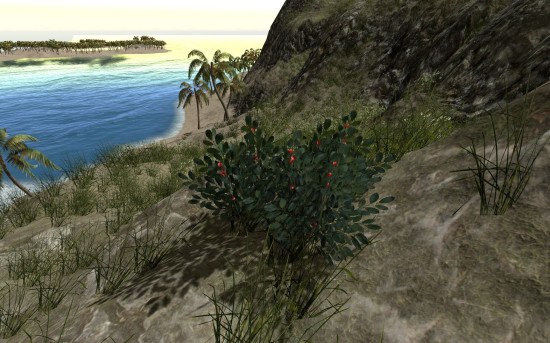
Survival depends on efficiently gathering natural resources. Players can collect basic items like stones, shells, and branches directly, while more complex materials require tools for harvesting, such as chopping trees or breaking rocks. Leaves, bark, and berries are found on trees and shrubs, and resource availability is randomized both in location and timing. Quick decision-making is necessary to secure items before they disappear, ensuring inventory contains only the desired materials.
Building and Crafting
Players can construct essential structures including campfires, shelters, crates, and fences. Campfires serve multiple functions: drying off after swimming, providing warmth at night, and cooking food. Creating a fire involves producing tinder, igniting it with a branch, adding fuel, and carefully managing cooking times to prevent burning. Proper construction and maintenance of these structures are critical for survival.
Procedurally Generated Environment
Resources and environmental features are generated dynamically and realistically. For instance, locations of berry bushes and water sources can change between sessions. Mushrooms grow near decaying wood, and removing fallen trees prevents further growth in that area. The ocean can deposit crates from a sunken ship onto the beach, offering opportunities to obtain valuable items. This system encourages continuous exploration and adaptation.
Psychological Challenges
Survival is not limited to hunger and thirst; players must also manage their mental state. Loneliness and isolation impact the "sanity" status, which becomes increasingly significant during the late stages of gameplay. Maintaining mental health is crucial to avoid detrimental effects that can compromise overall survival.
Future Features
Planned updates include an underwater world with seaweed, corals, fish swarms, and the ability to create fish traps. The game will introduce both aggressive and passive animals such as bears, goats, and crabs, providing additional resources like meat and fur, as well as opportunities to craft new tools, weapons, and armor. Advanced cooking mechanics, metal processing, and food preservation systems will expand the survival options. Multiple islands with unique scenarios, including volcanic activity, will further diversify gameplay. Special events, such as encounters with giant crabs or pirates, will add unpredictability.
Progression and Skills
Players can advance through a talent or skill tree, gaining a skill point each day to enhance survival capabilities. This system increases replayability and encourages long-term strategic planning. The game includes a permadeath system, but to reduce frustration, an emergency shelter mechanic allows players to survive critical events, albeit with a reduction in durability of island items.
Endgame Objectives
Endgame survival involves signaling for rescue by constructing visual aids such as flags and signal fires. Successfully attracting the attention of passing ships can result in rescue, providing a clear long-term goal for players to work toward throughout their survival journey.
Our Verdict
Lost in Nature is a solid survival simulation that offers an immersive and realistic experience. The dynamic weather, day-night cycle, and ocean mechanics make it stand out from other games in the genre. The challenge of managing your resources, maintaining your sanity, and surviving the unpredictable environment keeps things interesting without becoming frustrating. The addition of future features like underwater exploration and new animals shows promise for deeper gameplay.
However, while the foundation is strong, the game still feels like it’s in early stages. With some elements still in development, it might not be for everyone. But if you're a fan of survival games and enjoy the thrill of adapting to a constantly changing environment, Lost in Nature is definitely worth trying out. It’s not perfect, but it has potential to become something great.